Read time: 10 Min.
There’s no shortage of glossy “Best Places” or “Top 10” lists ranking Central and South American countries to visit or retire in. Some are insightful; others seem to have been written by people who’ve never left the hotel bar.
I want to begin with this true story recounted by a Canadian relative that reveals—on a deeply human and organic level—why Costa Rica deserves to be at the very top of that list. It’s a moment that captures what no statistic or ranking ever could: the pure essence of life here—Pura Vida.
Summer of 2002: London, Ontario, Canada – Latin Community Festival
In the heart of the very English city, during the first Latin Community Festival held in August, the Salvadoran M.C. began calling out the homelands represented in the crowd of recent migrants:
“México!”
A roar.
“El Salvador!”
Thunderous cheers.
“Colombia!”
Applause.
“Cuba!”
More cheers.
“Guatemala!”
The same.
Then he called out, “Costa Rica.”
Nothing.
No cheers. No voices. Just the music rolling on.
The silence said what statistics rarely do. While much of Latin America has been shaped by histories that push people outward—violence, instability, economic necessity—Costa Rica has long done the opposite. It has pulled its people inward, offering enough peace, democracy, and daily dignity that few feel compelled to leave.
Sometimes a country’s success is heard not in applause, but in its absence.
As recently noted by visiting U.S. Secretary of State Marco Rubio, there are more U.S. expats living in Costa Rica than Costa Ricans living in the U.S.A.
For a deeper dive into the subject, click here: https://costaricaresidencycard.com/why-choose-costa-rica/
How to Choose the Location that Suits You Best:
While you have decided to move to Costa Rica, you still need to choose the location that best suits your comfort zone. This can be daunting given the many choices across the twelve distinct climate zones and the many communities, each with a unique feel.
Let’s begin with this: Costa Rica is nestled between two oceans and their unique shifting currents of annual weather. Most of Costa Rica’s surface area is heavily forested (50% protected), and the terrain is mainly mountainous. That combination results in at least 12 distinct climates within this small country. The higher you go, the cooler it gets. (Ice can sometimes be found in the roadside ditches of the highest elevations in the green season). Therefore, sea-level areas are the hottest. However, most of Costa Rica is classified as rainforest. The challenge is to identify the climate and topography that best suit your preferences. This can be a considerable challenge for couples with opposing preferences. It would be best to find common ground in such circumstances. Not to worry.
While it may be fascinating to visit wildlife reserves or other protected forest areas, they are not suitable as habitats. You don’t want to worry every day about something that can bite, poison, infect, or worse, eat you. Very intrusive. You also don’t want to end up in an isolated area with little personal security from criminal elements. Where you ultimately choose to live requires careful consideration.
And remember: Most people you quiz for information have highly biased opinions. Once you arrive in an area that appeals to you, drive around and ask many questions. Compare and contrast thoughtfully. As you explore, be aware of the time of year. There is a distinct green (wet!) season and a hot, dry season. Costa Rica shifts from green to tan, then back again, almost as if there were a giant switch. Each area has its variations of such changes.
I will list below the most common areas where my clients reside: 80% live in rural outreaches outside the Central Valley and the capital city, San José.
All the following areas can be explored virtually on a convenient 3D App called Google Earth Pro (free):
https://www.google.com/intl/es-419/earth/versions
Be sure to download the For Computers version.
Then, you can explore immediately without even coming to Costa Rica for the first time. It’s the fastest way to see and comprehend the lay of the land and the varying topography. You will also see population concentrations vs. isolated areas.
Let’s explore:
- Central to the North Pacific. Start with Playa Jaco, a significant beach community closest to the Central Valley (about 90 -120 minutes from San José Airport). From there, drive to Puntarenas to take the ferry across the Golfo Nicoya to Paquera. A beautiful ride on any sunny day, especially early morning or sunset crossings. From the dock in Paquero, drive southward to the Nicoya Peninsula communities of Tambor, Malpais, Santa Teresa, and Manzanillo, then northward to Carrillo/Samara, Nosara, on up to Tamarindo, Flamingo, Conchal, and finally on up to Playa Coco and Hermosa.
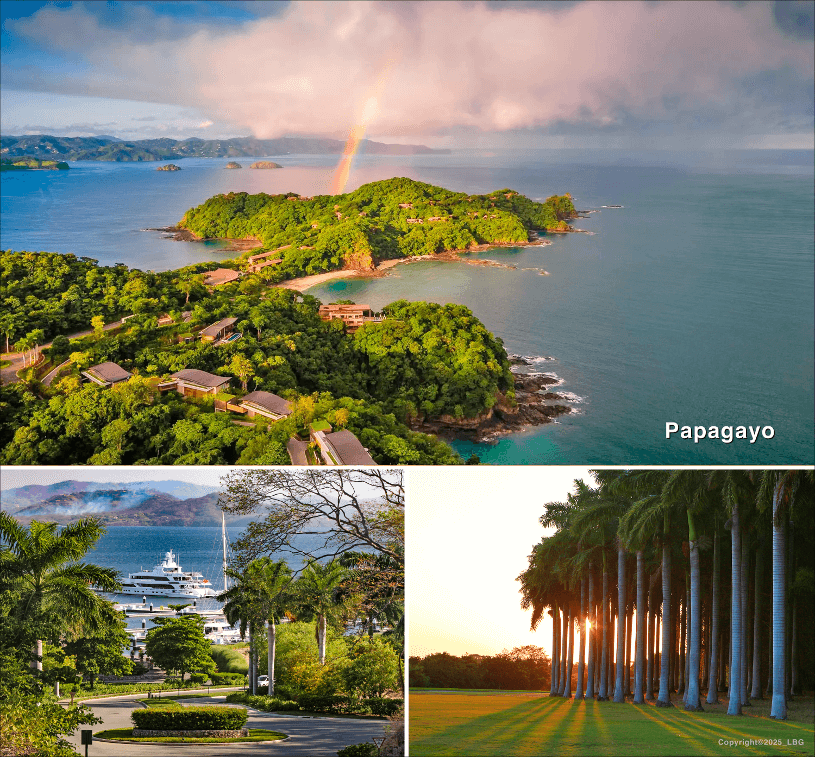
- The crown jewel of all of Costa Rica is Peninsula Papagayo, which is across from Hermosa. You owe it to yourselves to at least visit, even if it is only for lunch or dinner. (pricey!) There is a reason the Costa Rican government decided to invest billions in a major airport (Liberia) and a massive, ultra-modern highway system from Puntarenas to Liberia to provide much faster access to Papagayo and all those very popular beach communities. They consider it the most idyllic area for expats and Ticos in which to retire or maintain resort homes. Peninsula Papagayo has always been the penultimate development. However, there is now a significant new development across the bay from Papagayo in Hermosa. AOL co-founder Steve Chase purchased this spectacular piece of land in 2005 with the intent to develop a $1.5 billion enclave of hotels, condos, private residences, stores, docks, and related amenities. Finally, he broke ground in 2022 for a Waldorf Hotel and condo complex that rivals anything in Papagayo—another must-see for those interested in this part of Costa Rica.
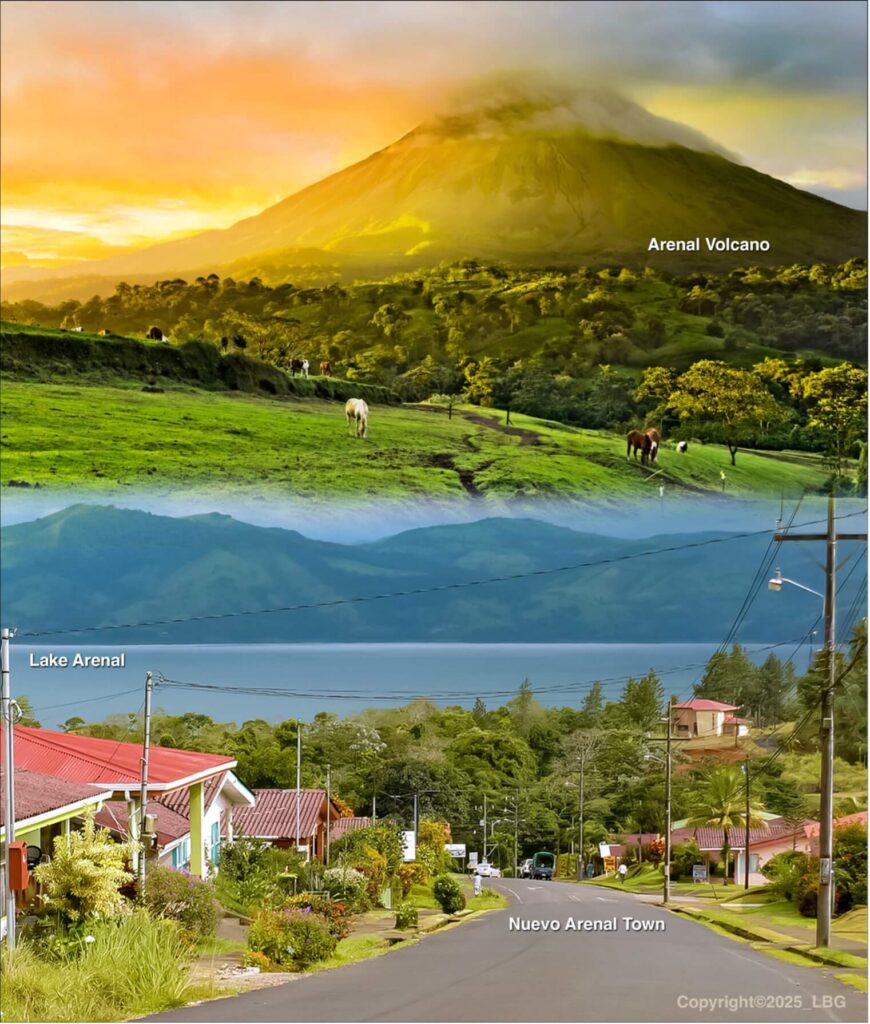
- If that area strikes you as too hot and dry in summer, you want to head inland to Nuevo Arenal, nestled midway down the side of a man-made lake at the foot of the famous Arenal Volcano. There is another well-developed town on the opposite side of Lake Arenal called Tronadora, and nearby Tilarán. Those communities are near one of Costa Rica’s most popular tourist towns, La Fortuna. The Nuevo Arenal side of the lake receives up to 200 inches of rainfall annually. But the opposite side of the lake gets half that amount. As a result, those slopes are rapidly gaining popularity.
Back to the Central Pacific
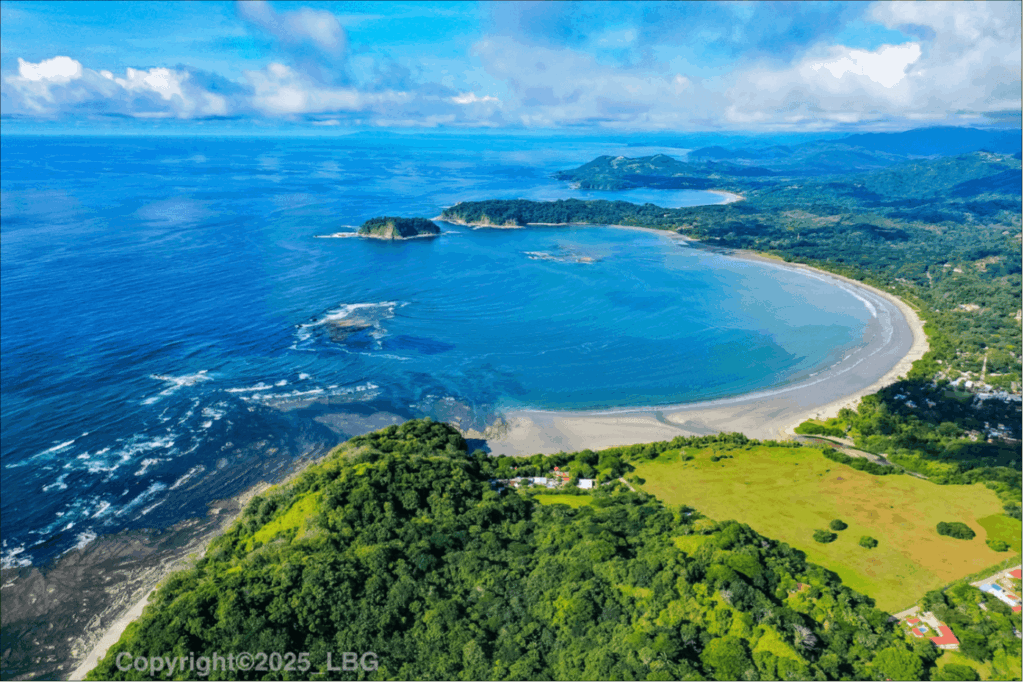
- South of Jaco, there are the pretty popular areas of Manuel Antonio/Quepos, Dominical, Uvita, and Palma Norte, all the way down to the exotic Drake Bay area, with several communities in between. Remember that the further south of Jaco you travel, the more humid and wet it gets. There are both sea-level communities and many homes widely spaced along the mountainsides, which can feel relatively isolated over time.
- Moving inland from that stretch, there is the increasingly popular town of Perez Zeledon. (A.K.A. – San Isidro General). Although isolated, it is a well-developed, sizable town with all modern conveniences. Its economic lifeblood is agriculture, evident in the city’s character and the surrounding picturesque areas.
- Two hours north of Perez Zeledon (or 30 minutes east of San José) is Cartago, which is the second largest city in Costa Rica and sits at the foot of the Irazú Volcano. Stretching up the side of that gentle-sloped mountain from the edge of Cartago are many vegetable farms and pastures, as well as a few small towns. A must-see even for a Sunday drive. The well-constructed highway leading all the way to the top of Irazú boasts some of the most beautiful views in all of Costa Rica right out your vehicle’s windscreen.
- Moving southward from Cartago, the equally picturesque route weaves through the towns of Paraiso and Orosi, both of which have become quite popular for expats. The weather is notably cooler than the central valley around San José and is preferred by fair-skinned expats who prefer less sun exposure.
- East of Cartago is the famous agricultural town of Turrialba, location of a world-class agricultural research and educational institution. For expats looking to do some hobby farming, this has also gained popularity. Turrialba town is a bit rustic, but it is surrounded by stunning vistas and beautifully laid-out farms growing a wide variety of produce and coffee. The overall climate of Turrialba is also much cooler than that of San Jose in the Central Valley.
- On the Atlantic side of Costa Rica, on the coast highway between the main port of Limon and the Panama border, there is the beach community of Puerto Viejo de Talamanca. It is a rougher, wetter landscape, but it is increasingly appealing to expats. But not for everyone.
Moving back inland:
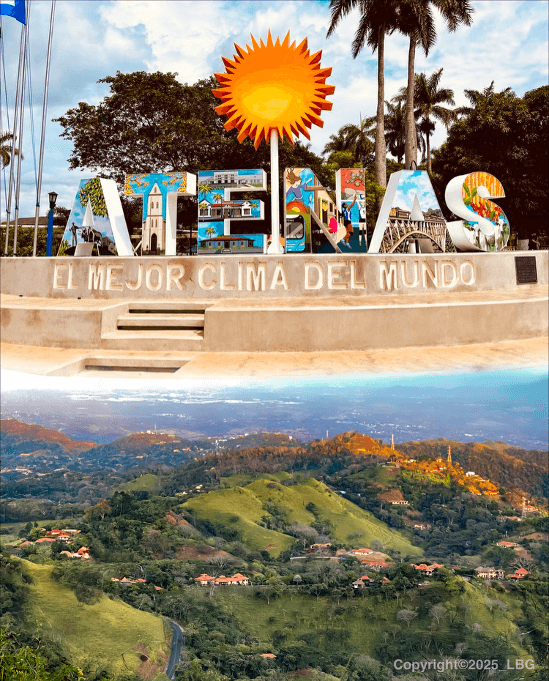
- Another popular area is the mountainous corridor encompassing Atenas, Grecia, Naranjo, Palmares, and San Ramon. This area is a 40-minute drive from the edge of San José and the main airport. It features a wide variety of venues to suit all budgets. This is also the area with the best overall weather in Costa Rica. (and the world). It is home to many U.S. and Canadian expats.
- Finally, we come to the Central Valley and the capital city of San José, where most of Costa Rica’s 4.5 million people live and work. The most popular areas of San José for expats are Escazú and Santa Ana. Both are located on the city’s periphery and have excellent year-round weather. They also feature every major convenience you’d find in South Florida, albeit at much higher prices. Both communities have terrific, gated communities, but are also highly congested—lots of pros and cons.
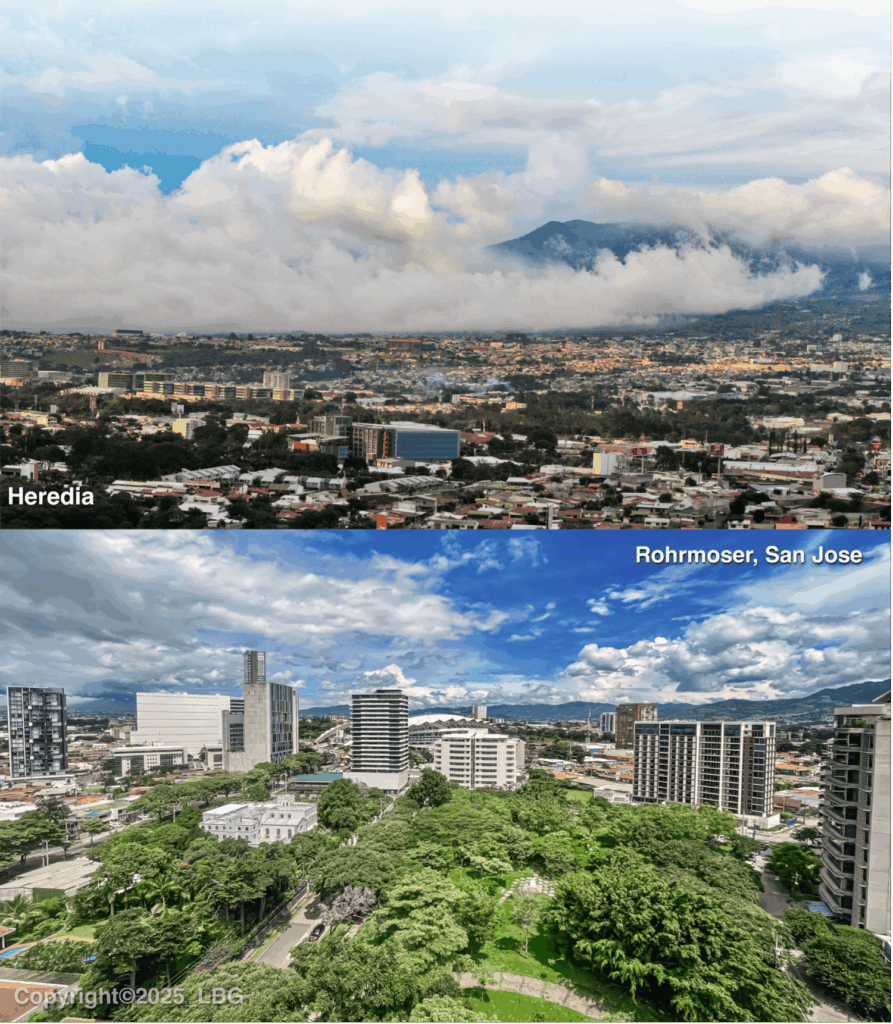
Coming into San José from the airport, you will also find the neighborhood of Cariari behind the Hilton DoubleTree hotel. Adjacent is Heredia, a town and province closely connected to San José, which extends up the mountain through several other smaller towns that overlap. This is also a very heavy coffee-producing area. The weather in Heredia is cooler and wetter, and the city experiences traffic congestion at certain times of the day. Not an issue if you are retired and can pick and choose your transit times.
Another part of San José is the increasingly popular neighborhood of Rohrmoser Sabana, near the National Stadium. It features numerous new high-rise condos, as well as repurposed large homes converted into ground-floor apartments. Most notably, Rohrmoser is within walking distance of many everyday conveniences, reducing the need to drive. It also features two small, well-appointed parks and several embassies, and is only blocks from San José’s Central Park, called Sabana. (It used to be the main airport for Costa Rica before being converted to a large park with many sports facilities.)
I have skipped many other communities, but they will appear as you explore. They are too numerous to list here. Be sure to ask and listen carefully to the question: Why did you choose to live here? You’ll hear a wide variety of reasons.
Deciding where to live in Costa Rica combines fact-finding and intuition. Look with both eyes and listen v-e-r-y carefully with both ears. Every place you visit will give off a very distinctive vibe.
It is also best to rent for the first year, or for visits that may last only months, in different areas or neighborhoods. You only want to decide once because changing venues in Costa Rica can be a massively stressful and financially risky endeavor.
Finally, do not do this on your own. Seek out and thoroughly vet a professional realtor. You need to understand that there is no real estate board in Costa Rica, nor government certification for anyone calling themselves a realtor. Land ownership here is also very “interesting.” You need a professional to ensure you are buying correctly and that you will acquire actual ownership. Never assume anything. If you are interested in a referral to a trusted realtor and real estate lawyer, please get in touch with me. My list is short and highly reliable.